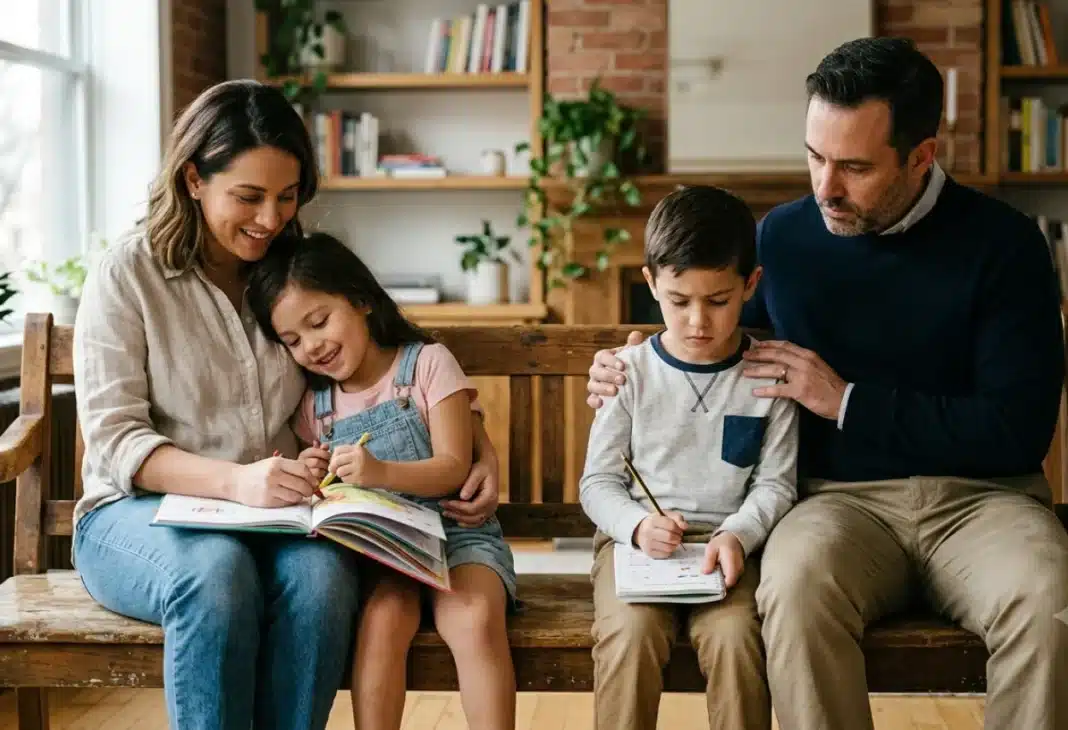
When people hear the word oxytocin, they probably think of love, hugging, trust, or emotional closeness. It is often called the “love hormone” or the “cuddle hormone,” especially in popular science. This description is not completely wrong, but I think it makes oxytocin sound much simpler than it really is. Oxytocin does not just make us love other people. In some situations, it may actually make us more selective about who we trust, protect, and cooperate with.
This is what makes oxytocin so interesting to me. It seems to strengthen social bonds, but those bonds are not necessarily directed toward everyone equally. We may become more generous and trusting toward people we consider part of our group, while people outside that group can be perceived differently. So, instead of thinking about oxytocin as a chemical that creates universal kindness, it may be more accurate to think of it as something that can make our social connections stronger and more important.
What Happens in the Brain?
The effects of oxytocin become easier to understand when we look at the brain areas involved in social behavior. The ventral striatum, ventromedial prefrontal cortex (vmPFC), and amygdala all have important roles in how we respond to other people.
The ventral striatum is involved in the brain’s reward system. Spending time with people we trust can feel rewarding, and oxytocin may help strengthen this feeling. The vmPFC is also important for evaluating social situations and deciding how much value we give to other people and relationships. Together, these systems can help make interactions with familiar people feel safer and more meaningful.
The amygdala is a little different. It helps us recognize emotionally important information, including possible threats. Oxytocin can sometimes reduce fear and anxiety during social interactions, especially when we are around people we already trust. This may be one reason why being with close friends or family can feel so comfortable.
However, this does not necessarily happen in the same way with strangers or members of another group. When someone is seen as an outsider, the brain may pay more attention to possible threats. The amygdala and insula, which is also involved in processing emotional and unpleasant experiences, can become more relevant in these situations.
This is where the idea of oxytocin as a simple “love hormone” starts to fall apart. It may not simply reduce fear or increase kindness. Instead, it can make social relationships more significant. The important question then becomes: who do we see as part of our social circle?
When Helping “Us” Can Mean Rejecting “Them”
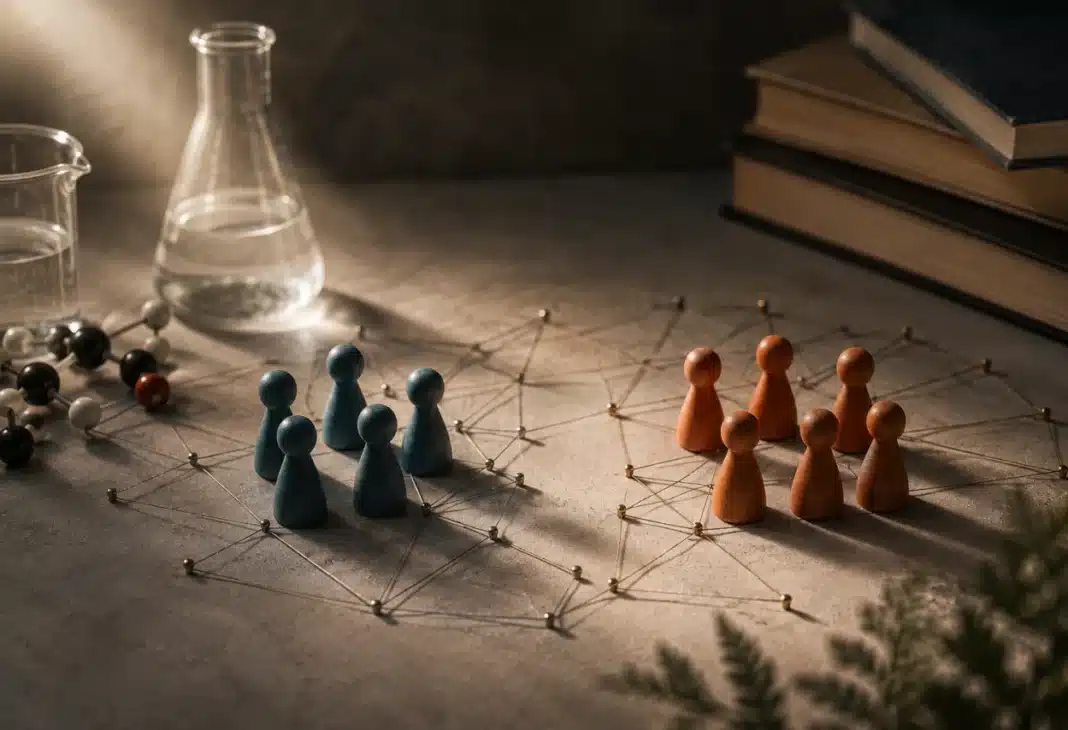
This idea is closely related to parochial altruism. Basically, parochial altruism refers to being helpful and cooperative toward members of our own group while being less cooperative toward outsiders. It sounds contradictory at first, but human history gives us many examples of this kind of behavior.
Research by Carsten de Dreu and his colleagues has provided interesting evidence for the connection between oxytocin and this type of social behavior. In studies using intranasal oxytocin, participants sometimes became more generous toward members of their own group. They were more willing to share resources and cooperate with people they considered to be “one of us.”
Again, this sounds positive. But what happens when there is competition between groups?
Some studies suggest that oxytocin can also increase protective behavior when people believe that their group is under threat. In situations involving competition, participants may become more willing to make decisions that protect their own group, even if those decisions are harmful to an outside group.
I do not think this means that oxytocin directly creates hatred. That would be an oversimplification. A more interesting explanation is that oxytocin strengthens the motivation to protect people we already feel connected to. If another group is presented as dangerous, this protective instinct can sometimes turn into defensive or aggressive behavior.
To me, this is actually more interesting than simply labeling oxytocin as either “good” or “bad.” The same tendency that makes someone want to protect their family or friends can potentially become problematic when the idea of protection is extended to an entire group.
An Ancient Mechanism in a Modern World
From an evolutionary perspective, this behavior makes some sense. Humans have always depended on groups for protection, food, resources, and cooperation. Being strongly connected to members of our own group could have increased our chances of survival. In that environment, protecting “our people” was probably useful.
The problem is that our definition of a group has changed. Today, people can identify themselves through nationality, ethnicity, political ideas, religion, sports teams, or even online communities. Social media can make these boundaries even stronger because we are constantly exposed to people who agree with us and information that reinforces the difference between “us” and “them.”
This is why I think oxytocin research is relevant beyond neuroscience. It gives us another way to think about modern polarization and group conflict. At the same time, biology should not be used as an excuse for prejudice or aggression. Oxytocin does not control our behavior by itself. Our experiences, beliefs, environment, and conscious decisions also matter.
Maybe the most useful way to think about oxytocin is not as the hormone of love, but as a hormone that can strengthen social bonds. It can help create trust, cooperation, and closeness, but these feelings are influenced by how we define the people around us. The real challenge, then, may not be getting rid of our instinct to belong. It may be learning how to make our definition of “us” a little bigger.
Kaynakça
- De Dreu, C. K. W., Greer, L. L., Handgraaf, M. J. J., Shalvi, S., Van Kleef, G. A., Baas, M., Ten Velden, F. S., Van Dijk, E., & Feith, S. W. W. (2010). The neuropeptide oxytocin regulates parochial altruism in intergroup conflict among humans. Science, 328(5984), 1408–1411. https://doi.org/10.1126/science.1189047�
- De Dreu, C. K. W. (2012). Oxytocin modulates cooperation within and competition between groups: An integrative review and research agenda. Hormones and Behavior, 61(3), 419–428. https://doi.org/10.1016/j.yhbeh.2011.12.009�
- Bethlehem, R. A. I., van Honk, J., Auyeung, B., & Baron-Cohen, S. (2013). Oxytocin, brain, and social behavior. Annual Review of Psychology, 64, 69–93. https://doi.org/10.1146/annurev-psych-113011-143708�