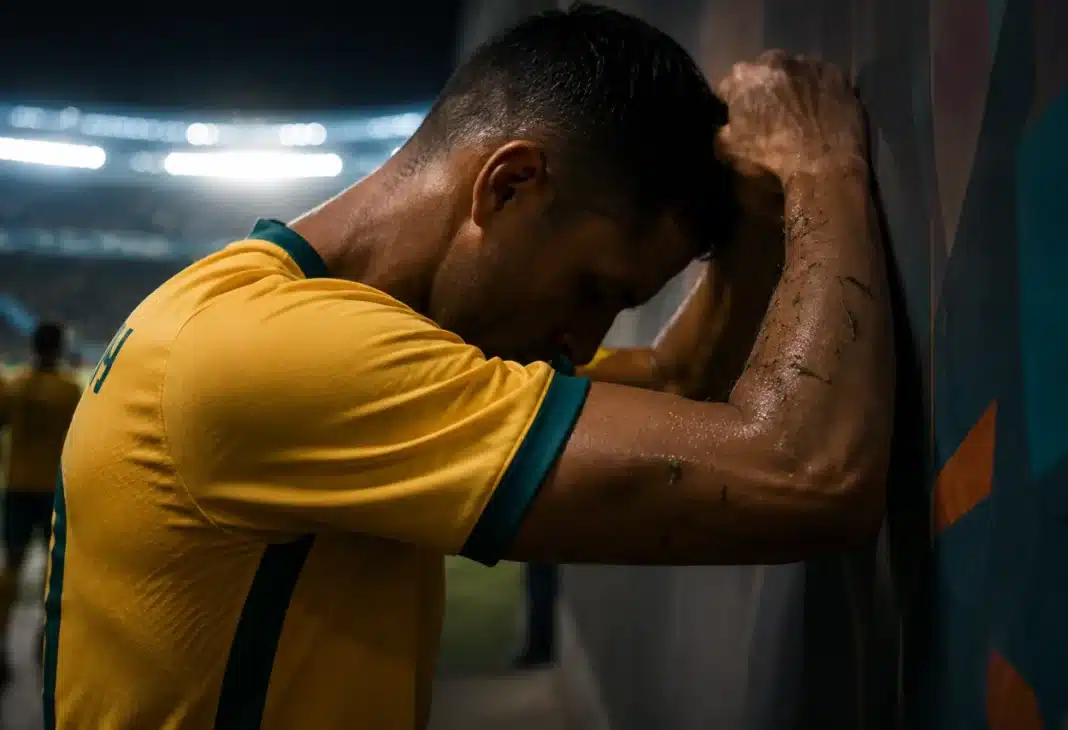
The FIFA World Cup is often described as the biggest stage in football. For several weeks, players are watched by millions, national expectations become impossible to ignore, and every decision seems to carry more meaning than usual. A goal can turn someone into a national hero, while a missed penalty may follow a player for years. As I watched the tournament, I found myself paying less attention to formations and statistics and more attention to what might be happening in the minds of the people on the pitch.
That was one of the clearest reminders of why I am increasingly drawn to sport psychology.
From the outside, professional footballers can appear almost superhuman. They are physically prepared, technically gifted and familiar with competition. Yet the World Cup shows how easily performance can change when emotion enters the picture. A player may have taken hundreds of penalties in training, but repeating the same movement in front of a global audience is an entirely different psychological task. The body knows what to do, but the mind may suddenly become crowded with consequences.
This is often called “choking under pressure,” although the phrase can sound unfairly simple. It suggests weakness, when it actually reflects the way anxiety and self-consciousness can interrupt an automatic skill. Under intense pressure, athletes may begin thinking too carefully about movements they usually perform without effort. Their breathing changes, their muscles tighten and time appears to slow down. What looks like a technical mistake may be the visible outcome of an invisible mental struggle.
The tournament also demonstrates that confidence is not a permanent quality that an athlete either possesses or lacks. It can change within minutes. A nervous team may look completely transformed after scoring, while a previously dominant side can lose its sense of control after conceding unexpectedly. Momentum is not something magical, but it has a clear psychological dimension. Players respond to their teammates’ body language, the crowd, the coach’s reactions and their own interpretation of the match. Belief can spread through a team, but so can panic.
This made me think more carefully about collective confidence. Football is often presented through individual stars, yet success depends heavily on whether players trust one another. A team may contain exceptional talent and still struggle if communication is poor or if its players are afraid of making mistakes. By contrast, a less celebrated team can perform beyond expectations when its members share responsibility and remain committed to the same purpose.
Leadership becomes especially visible during these moments. The most influential player is not always the loudest or most famous. Leadership may appear through a calm gesture after a mistake, a brief conversation before a penalty shootout or a player continuing to ask for the ball despite having failed earlier. These small behaviours help regulate the emotional atmosphere of the team. They communicate that one error does not have to become the story of the entire match.
Another aspect that stayed with me was the psychological weight of representing a country. At club level, footballers already experience criticism and public attention. During a World Cup, however, performance becomes connected to national identity. Players are not only competing for themselves or their teammates. They may feel responsible for the hopes of people they have never met.
For some athletes, that responsibility may create energy, pride and a stronger sense of purpose. For others, it may produce fear, guilt or the belief that failure will disappoint an entire nation. The same pressure can therefore motivate one player while overwhelming another. This is why psychological support cannot follow a single formula. Athletes differ in how they understand pressure, express emotion and respond to expectations.
Social media adds another layer. Players now face immediate praise and abuse, sometimes only seconds after a match ends. A single mistake can be replayed endlessly, turned into a joke or treated as evidence of a player’s personality. In that environment, athletes need more than motivational speeches. They need practical ways to manage attention, respond to criticism and separate their identity from their most recent performance.
The World Cup also made me consider the importance of emotional recovery. Teams may have only a few days to process a painful result before competing again. Physical recovery is carefully monitored, but psychological recovery can be less visible. Disappointment, anger and embarrassment do not disappear simply because another match is approaching.
Resilience is sometimes presented as remaining positive regardless of what happens. I see it differently. Resilience does not mean pretending that failure does not hurt. It means accepting the emotional impact of a difficult experience without allowing it to determine what happens next. An athlete can feel disappointed and still prepare. A player can lose confidence and gradually rebuild it. A team can acknowledge that it performed badly without deciding that it is incapable of improving.
This understanding has changed how I view sport psychology. I once associated the field mainly with motivation, concentration and peak performance. I now see it as a much broader area involving identity, emotional regulation, relationships, wellbeing and the meaning athletes attach to success and failure. The purpose is not to remove pressure from sport. Pressure is part of what makes competition meaningful. The purpose is to help athletes perform within that pressure without losing their sense of self.
My academic interests have increasingly focused on the relationship between emotion, body image and psychological wellbeing in athletic and fitness environments. Watching the World Cup strengthened my desire to continue towards sport psychology because it showed how closely mental health and performance are connected. Behind every tactical decision is a person managing expectations. Behind every mistake is an emotional response. Behind every comeback is a process involving trust, regulation and recovery.
The scoreboard tells us who won, but it cannot tell the whole story. It does not show who played through fear, who recovered from criticism, who quietly held the team together or who struggled after the final whistle. Sport psychology encourages us to look at these less visible parts of performance.
That is what the FIFA World Cup taught me most clearly: the mental game is not separate from football. It is present in every pause, every decision, every mistake and every attempt to begin again.